
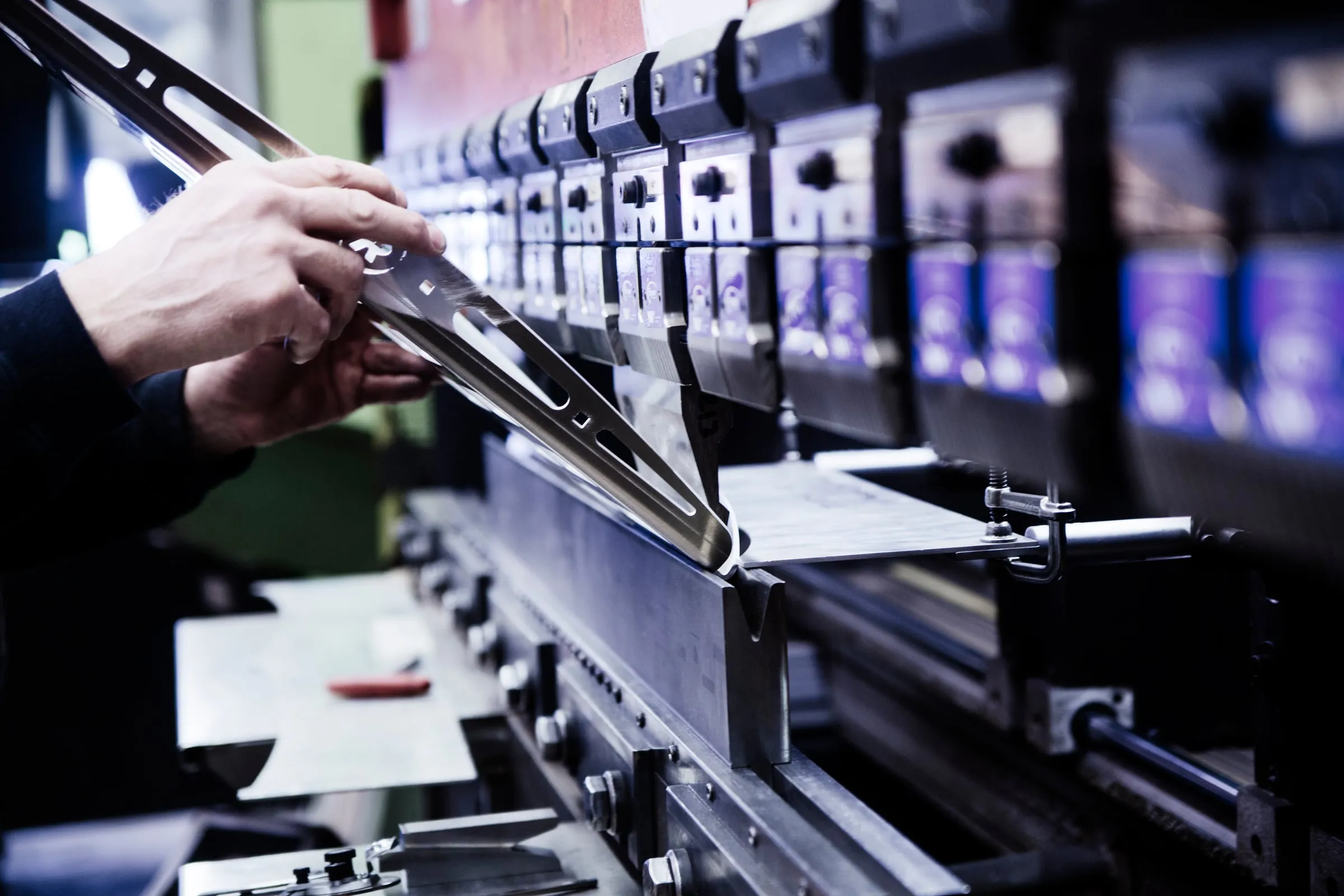
Aluminium sheet metal
Lightweight, strong and corrosion-resistant. We specialise in aluminium welding for machine building and enclosures.
About this operation
Aluminium combines low weight with good strength and corrosion resistance. That makes it ideal for moving parts, enclosures and structures where weight matters.
Our welding work in aluminium is done with TIG and MIG, matched to sheet thickness and application.
Aluminium sheet processing calls for different machine settings than steel or stainless steel: aluminium springs back more when bending, and heat dissipates faster when welding. We factor that into flat-pattern development, tooling and welding parameters.
On the Trumpf TruLaser 3040 we cut aluminium from 0.5 to 15 mm. When press braking, aluminium behaves differently from steel: it springs back more, which makes the bend angle and the choice of tooling decisive for the final dimension. Where tolerances are tight we account for that during work preparation rather than correcting afterwards.
For finishing we have a blast cabin of 8 × 4 × 3 m in which we blast with glass beads of 100 to 200 μm. This gives aluminium an even matt surface and removes light contamination without attacking the material.
Aluminium is more prone to scratching than steel. For visible work we therefore leave the protective film in place through to the final operation and take that into account in the sequence of operations. For welded assemblies, read more on our page about aluminium welding.
Choosing aluminium over steel or stainless steel is usually a trade-off between weight and load. Aluminium is considerably lighter, which counts for moving parts, doors and panels that are handled by hand, and it does not corrode without additional protection. Steel and stainless steel are stiffer at the same thickness; where stiffness is decisive, we compensate in aluminium with a greater thickness or with bent flanges and stiffeners.
Materials: Aluminium (various alloys)
From drawing
to delivery
- 01
Laser cutting
Cutting aluminium sheet.
- 02
Press braking
Bending with attention to springback.
- 03
Aluminium welding
TIG/MIG welding, low distortion.
- 04
Finishing
Blasting in house; anodising and powder coating are outsourced.
Applications
Machine building · Enclosures · Transport & lightweight structures
Frequently asked questions
What sheet thickness in aluminium can you laser cut?
On the Trumpf TruLaser 3040 we cut aluminium from 0.5 to 15 mm. With thin sheets and large surfaces we take flatness into account: bent flanges or stiffeners are then often more sensible than a thicker sheet.
Why does aluminium spring back more when press braking?
Aluminium has different material properties from steel and springs back more after bending. The final angle therefore depends more heavily on the choice of tooling and the settings. We account for that during work preparation rather than correcting afterwards.
Can you give aluminium a matt finish?
Yes. In our blast cabin of 8 by 4 by 3 metres we blast with glass beads of 100 to 200 micrometres. This gives an even matt surface and removes light contamination without attacking the material.
Do you weld aluminium in house?
Yes, with TIG and MIG. Which technique we choose depends on sheet thickness, joint shape and the requirements for appearance. Our page on aluminium welding sets out in more detail what we watch for with aluminium.
Discuss your drawing,
part or assembly.
Response within one working day · 074-2912235 · info@assinkschipholt.nl