
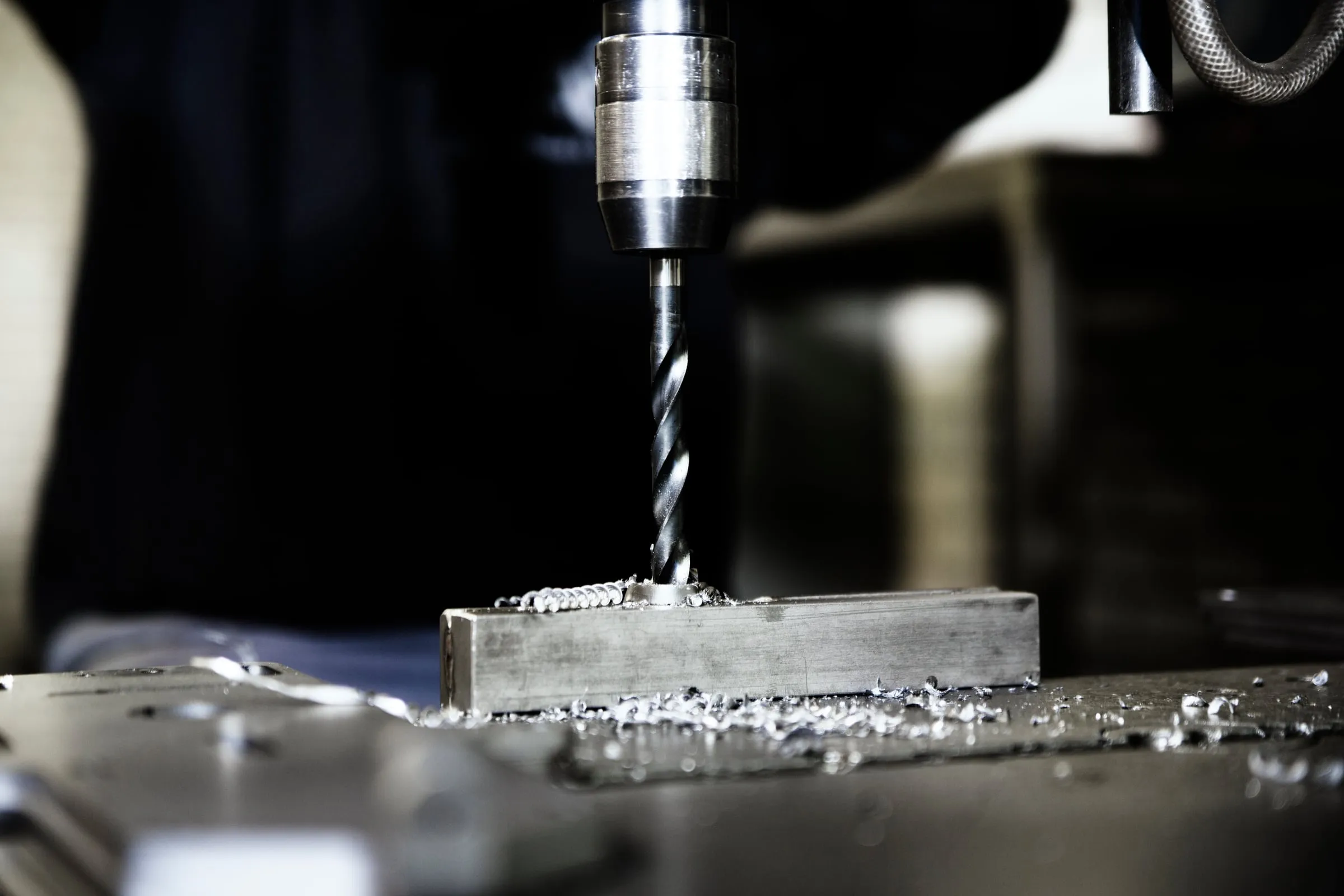
Self-clinching nuts & rivet nuts
With self-clinching nuts and rivet nuts we make sheet metal ready for assembly: dependable threads, even in thin material.
About this operation
Self-clinching nuts and rivet nuts give sheet metal a strong threaded connection without loose fasteners. This allows us to supply assembly-ready parts that can go straight into your line.
We install self-clinching nuts by machine and square, with a press force matched to sheet thickness and nut type — so the thread stays secure even with regular disassembly and reassembly.
The difference between the two lies in how the joint is created. A self-clinching nut is pressed cold into a pre-cut hole: the knurl on the nut displaces sheet material, which flows back into a groove and locks the nut against pull-out and rotation. A rivet nut (blind rivet nut) is deformed from one side and clamps behind the sheet. Self-clinching nuts give the strongest and flattest joint; rivet nuts are the answer when the reverse side is not accessible or must not be deformed.
Sheet thickness largely determines what is possible. For a self-clinching nut the sheet material has to be softer than the nut, otherwise it will not flow into the groove; the combination of hard material and a fine thread is therefore critical. The distance to the edge and to surrounding cut-outs matters too: too close to the edge and the material bulges. We assess that on the drawing beforehand, so that it is not a surprise on the first batch.
Material and nut choice have to match. In stainless steel sheet metal we fit stainless steel nuts, to avoid galvanic corrosion. In aluminium, stainless steel or zinc-plated steel is chosen depending on the environment. If the part is powder coated after insertion, the thread has to be masked or re-worked afterwards — otherwise the coating runs into the thread and the bolt no longer fits.
Insertion is done by machine and square to the sheet, with a press force matched to sheet thickness and nut type. We then check for flatness around the nut and for the seating of the thread. That way the joint stays firm, even if the part is regularly dismantled and reassembled in service.
Self-clinching and rivet nuts are part of a larger whole: the hole comes from the laser, the edges are deburred and the part is often press braked before the nut goes in. That sequence is not arbitrary — a nut fitted too early gets in the way during bending or is deformed in the press. We fix that sequence during production engineering.
To assess a request we need: the drawing with the hole positions, the sheet thickness and material, the required thread size, whether the nut sits on the visible or the reverse side, and the finishing. If you are not sure whether a self-clinching or a rivet nut fits, tell us what the joint has to carry and how often it needs to come apart; we will advise on that basis.
Materials: Stainless steel · Aluminium · Steel
From drawing
to delivery
- 01
Preparation
Cutting holes to size.
- 02
Clinching
Fitting the self-clinching or rivet nut.
- 03
Inspection
Checking flatness and strength.
Applications
Enclosures · Panels · Assembly-ready sheet metal
Frequently asked questions
What is the difference between a self-clinching nut and a rivet nut?
A self-clinching nut is pressed cold into the sheet; the knurl displaces material that flows back into a groove, locking the nut against pull-out and rotation. A rivet nut is deformed from one side and clamps behind the sheet. The self-clinching nut gives the strongest and flattest joint; the rivet nut is the choice when the reverse side is not accessible.
From what sheet thickness can you fit a self-clinching nut?
That depends on the nut type, the sheet material and the thread size. The sheet has to be softer than the nut, so hard material or a fine thread in thin sheet can be a reason to choose a different size or a rivet nut instead. We assess that combination on the drawing for each request.
In which materials do you fit self-clinching and rivet nuts?
In stainless steel, aluminium and steel. We match the nut material to the sheet: stainless steel nuts in stainless steel sheet metal to avoid galvanic corrosion, and in aluminium either stainless steel or zinc-plated steel depending on the environment.
Does the thread stay put under repeated dismantling?
Yes, provided the nut has been fitted square and with the correct press force. A properly inserted nut resists both pull-out and rotation, which makes it suitable for parts that have to be opened regularly in service. After insertion we check flatness and the seating of the thread.
Can the part still be powder coated once the nuts are in?
Yes, but the thread then has to be masked or re-worked after coating, otherwise the coating runs into the thread. Tell us which finishing the part receives and we will set the sequence accordingly.
Discuss your drawing,
part or assembly.
Response within one working day · 074-2912235 · info@assinkschipholt.nl