
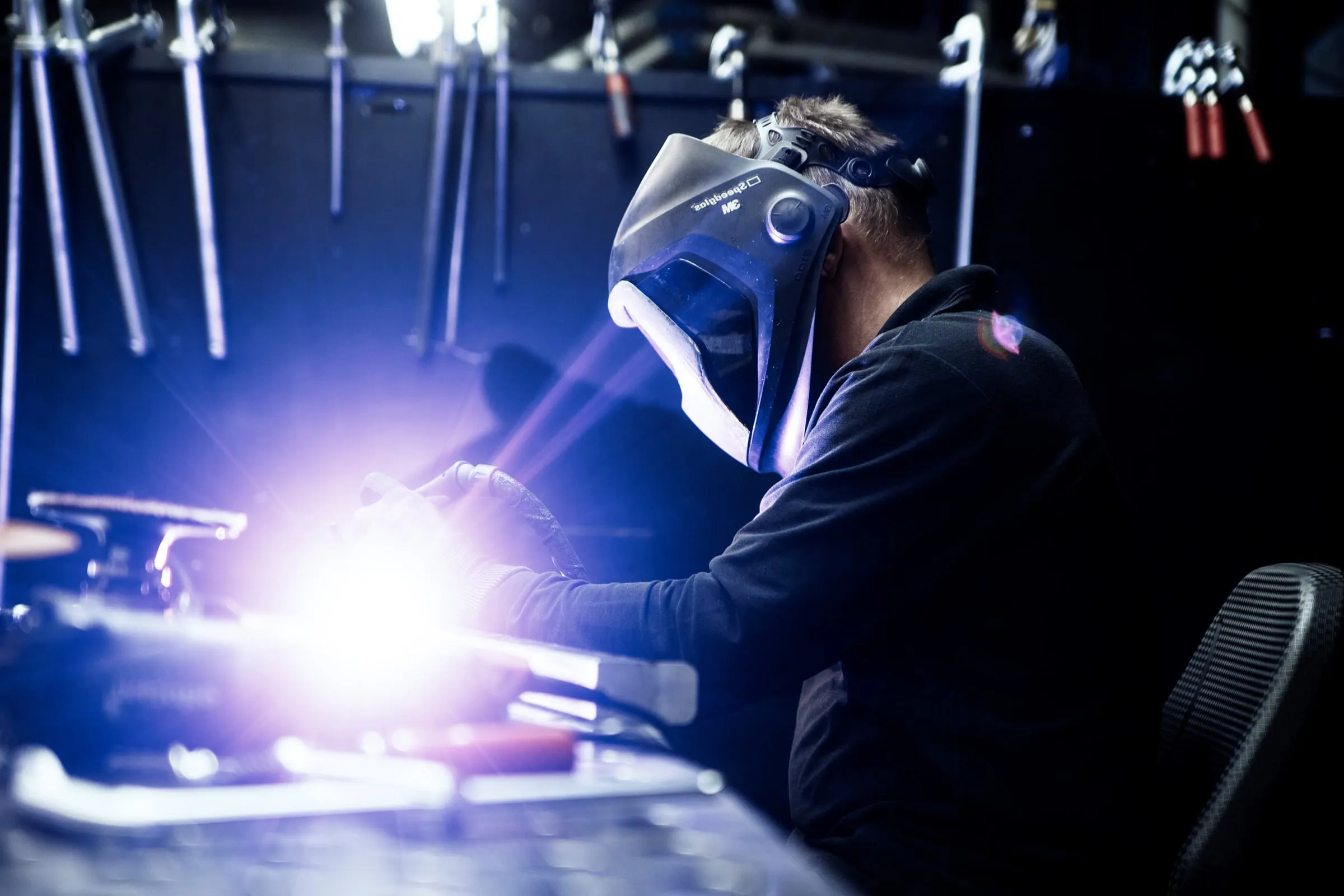
Aluminium welding
Aluminium calls for craftsmanship: the right heat input, preparation and technique. We weld aluminium with TIG and MIG, low-distortion and cleanly finished.
About this operation
Aluminium conducts heat quickly and oxidises easily. With the right preparation and technique (TIG/MIG) we lay strong, clean seams — suitable for machine building, enclosures and lightweight constructions.
As a metalworking company experienced in welding aluminium, we know the pitfalls: too much heat input causes distortion, incorrect preparation causes porous seams. We match current, wire choice and sequence to sheet thickness and alloy.
Aluminium behaves fundamentally differently from steel or stainless steel when welded. It conducts heat far more quickly, so more heat is needed to melt it and that heat spreads further through the workpiece. On top of that comes the oxide layer: it only melts at a far higher temperature than the aluminium beneath it and has to be removed before welding.
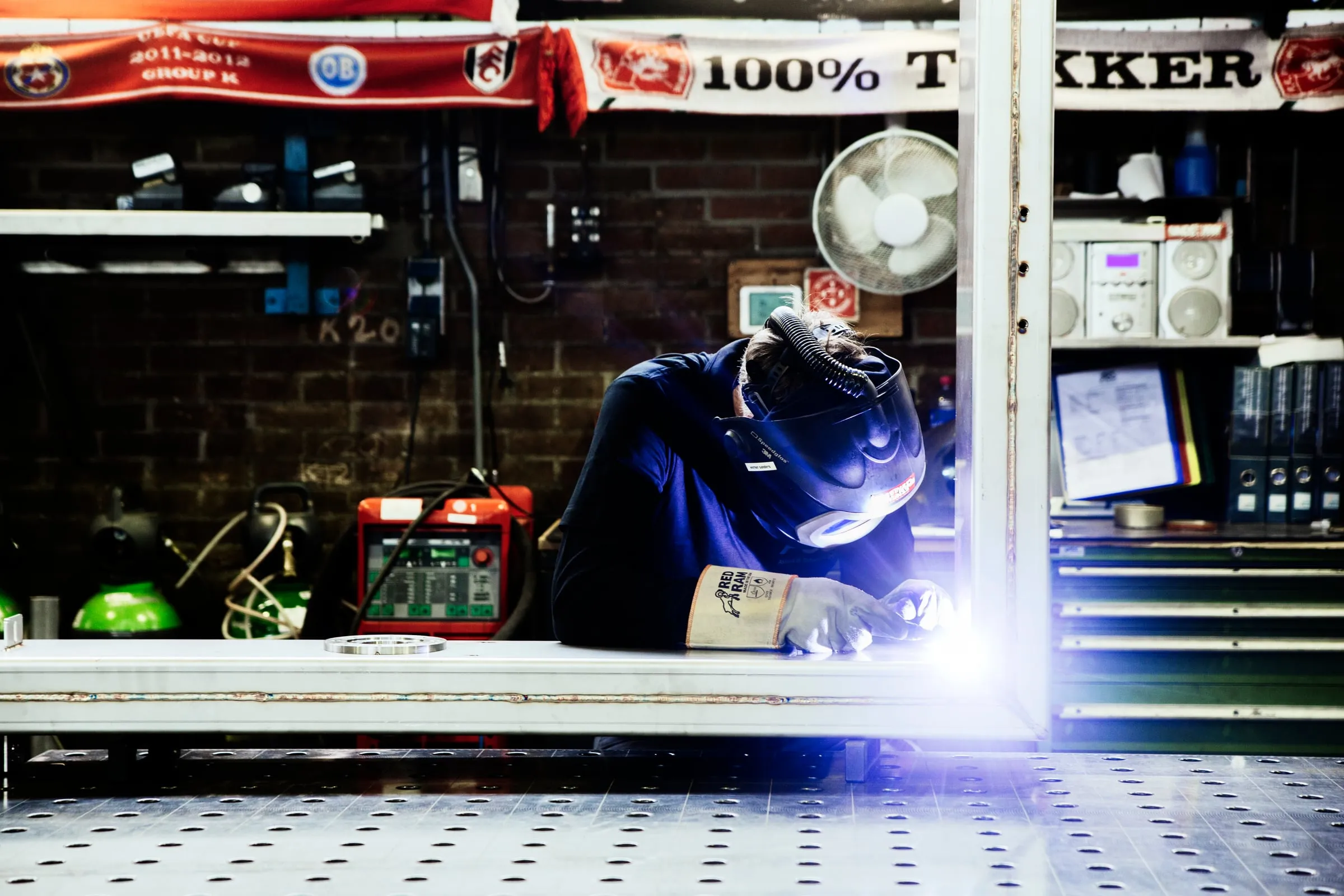
We weld aluminium with TIG and MIG. TIG gives the most control over heat input and suits thin material and visible seams; MIG is faster and suits thicker material and larger series. Which of the two we choose is decided per order, based on sheet thickness, joint shape and the requirements for appearance.
To limit distortion we clamp parts, tack first and determine the welding sequence in advance; after welding we check the dimensions. The sheet metal work preceding such an assembly — cutting, press braking and finishing — is described on our page about aluminium sheet metal.
After welding, the application determines how far we take the finishing. Where appearance matters, we blast with glass beads in our blast cabin, which gives an even matt surface. Where the seam is functional and stays out of sight, deburring and visual inspection are sufficient. Please indicate with your request which side is the visible side; that determines both the welding choice and the finishing.
Materials: Aluminium (various alloys)
From drawing
to delivery
- 01
Preparation
Cleaning and removing the oxide layer.
- 02
Welding
TIG/MIG with controlled heat input.
- 03
Finishing
Grinding and finishing.
Applications
Machine building · Enclosures · Lightweight constructions
Frequently asked questions
Which technique do you use to weld aluminium?
TIG and MIG. TIG gives the most control over heat input and suits thin material and visible seams; MIG is faster and suits thicker material and larger series. We make the choice per order.
Why is welding aluminium harder than steel?
Aluminium conducts heat far more quickly, so more heat is needed and it spreads further through the workpiece. In addition, the oxide layer only melts at a far higher temperature than the aluminium beneath it, and has to be removed before welding.
How do you limit distortion in aluminium?
By clamping parts, tacking first and determining the welding sequence in advance. After welding we check the dimensions. With thin sheet and long seams, that sequence determines the dimensional stability of the end product.
What happens to the seam after welding?
That depends on the application. Where appearance matters, we blast with glass beads for an even matt surface. If the seam stays out of sight, deburring and a visual inspection are sufficient. Please indicate with your request which side is the visible side.
Discuss your drawing,
part or assembly.
Response within one working day · 074-2912235 · info@assinkschipholt.nl