
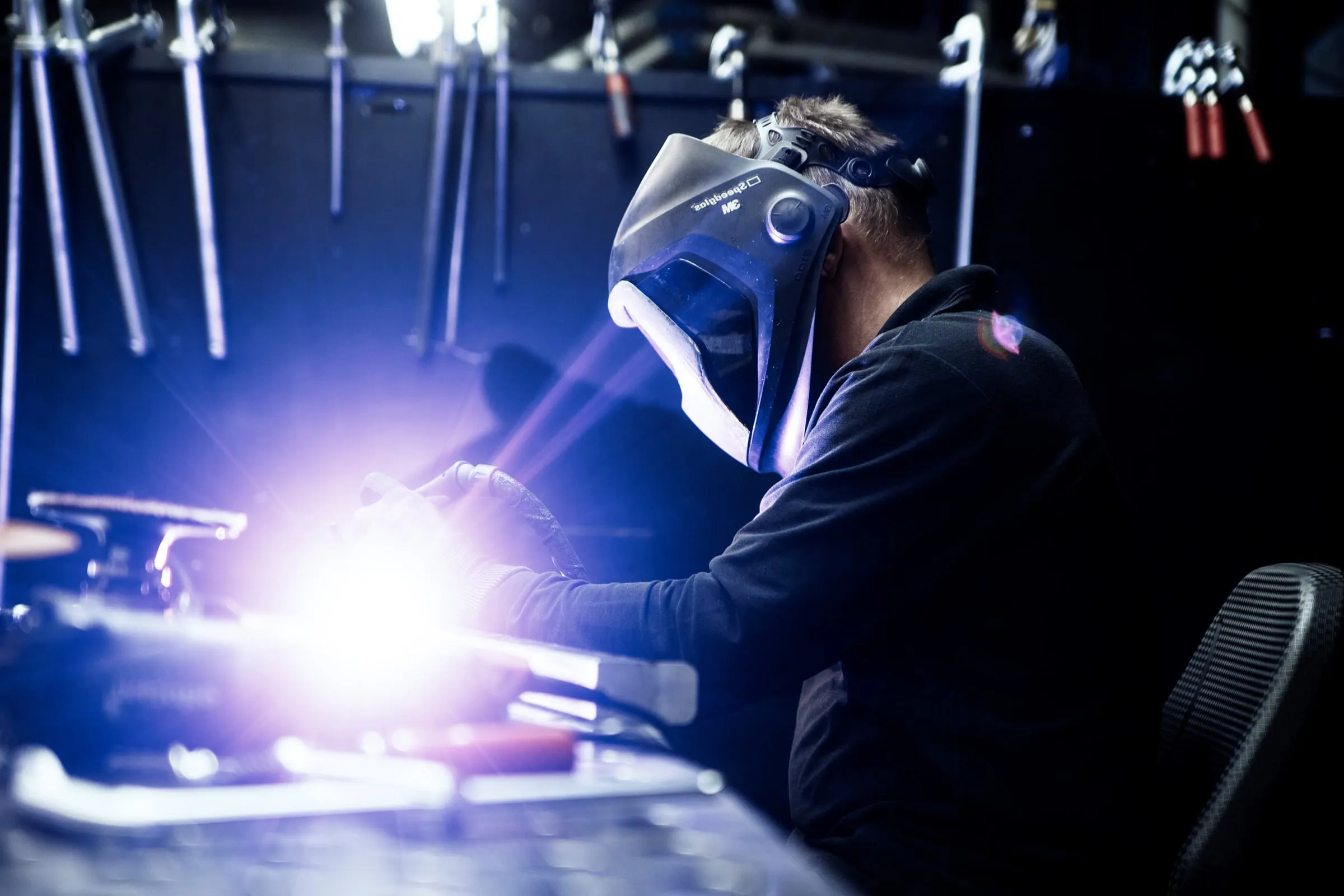
Welding
From manual TIG and MIG welding to automated and laser welding. We choose the welding method that suits the material, the batch size and the quality requirement.
About this operation
Welding is core craftsmanship at Assink & Schipholt. Depending on the application we use manual or laser welding — always with attention to penetration, distortion and seam quality. Automated welding for larger series is outsourced to a regular partner; in Hengelo we weld manually and by laser.
Which welding method we choose depends on the material, the sheet thickness and the requirements for the seam. TIG welding gives controlled heat input and a clean seam, which suits thin material and visible work in stainless steel and aluminium. MIG welding is faster and suits thicker material and larger series. Laser welding produces a narrow seam with little distortion.
Distortion is the greatest risk to dimensional accuracy when welding. We limit it by metering the heat input, clamping parts and determining the welding sequence in advance. After welding we check the dimensions, so that a deviation does not first come to light during assembly.
Finishing differs per material. On stainless steel we remove heat tint and passivate, so that corrosion resistance around the seam is retained — we explain why that is necessary separately (in Dutch). Aluminium and steel are deburred and, where required, blasted in our blast cabin.
For welding we work under ISO 3834-2 and we are certified to EN 1090-1. What that means for documentation and inspection per order is set out on our quality page. We do not carry out robot welding in house; that takes place within the group at Baas Metaal.
What we like to receive with a welding request: the drawing with the required joint shape, the material and sheet thickness, which dimensions are critical, whether there are appearance requirements for the seam, and whether documentation is part of the delivery. The earlier those requirements are known, the better we can set up the welding sequence and the finishing — straightening afterwards always costs more time than planning up front.
Materials: Stainless steel · Aluminium · Steel
From drawing
to delivery
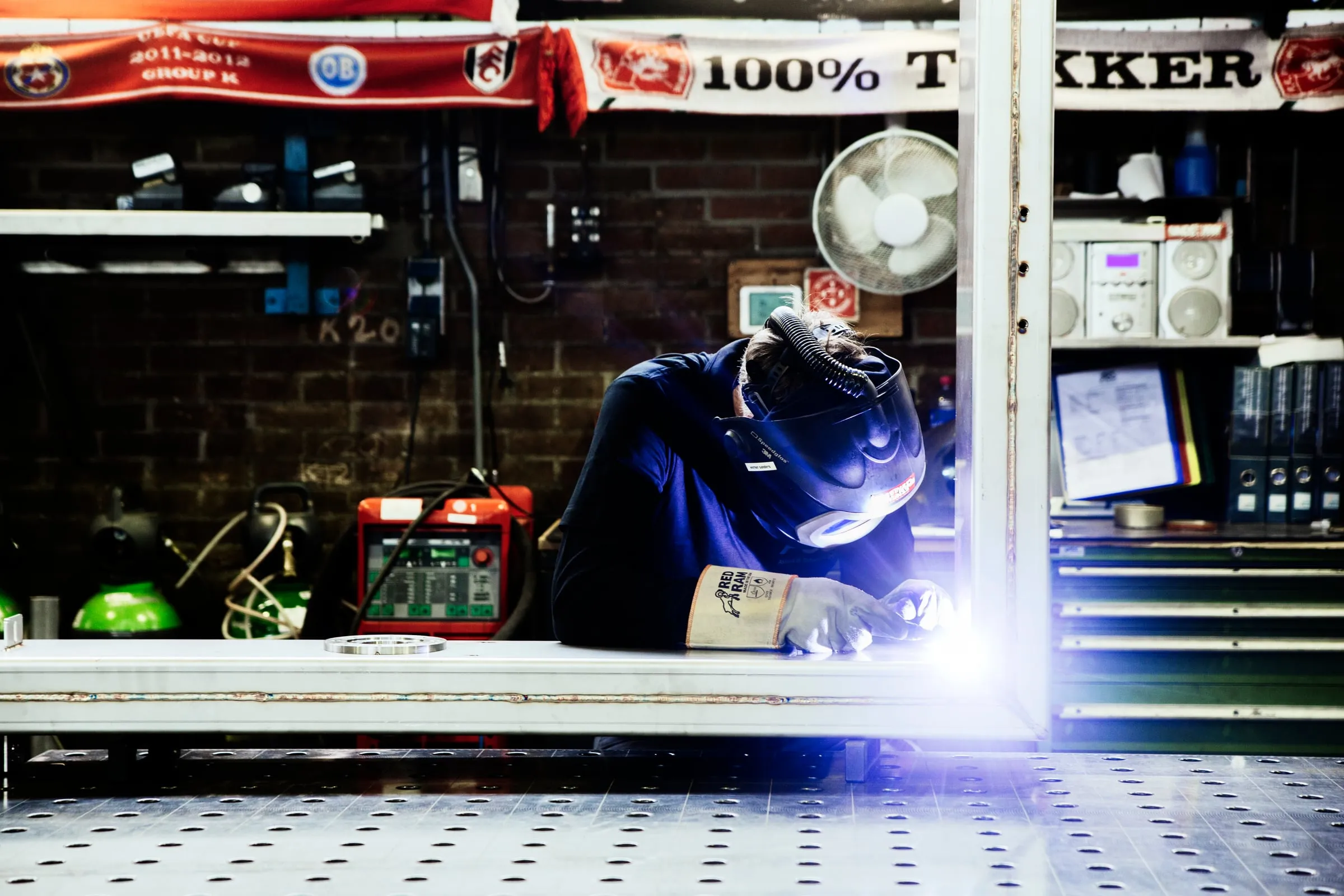
- 01
Preparation
Fitting up and fixturing.
- 02
Welding
TIG / MIG or laser.
- 03
Finishing
Grinding, pickling and passivating where required.
- 04
Inspection
Visual inspection of the weld seams.
Applications
Welded constructions · Enclosures · Machine parts
Frequently asked questions
Which welding methods do you have in house?
We weld with TIG and MIG and have laser welding available. TIG gives the most control over heat input and suits thin material and visible work; MIG is faster for thicker material and larger series. We do not carry out robot welding in Hengelo — that takes place within the group at Baas Metaal.
Are you certified for welding work?
For welding we work under ISO 3834-2 and we are certified to EN 1090-1. In addition, our quality system is certified to ISO 9001. What that means per order for documentation and inspection is set out on our quality page.
How do you prevent distortion when welding?
By metering the heat input, clamping parts and determining the welding sequence in advance. After welding we check the dimensions, so that a deviation does not first come to light during assembly. Straightening afterwards always costs more time than planning up front.
Which materials do you weld?
Steel, stainless steel in grades 304 and 316, and aluminium. We match the welding method and the finishing to the material: on stainless steel we remove heat tint and passivate, while aluminium and steel are deburred and, where required, blasted.
Discuss your drawing,
part or assembly.
Response within one working day · 074-2912235 · info@assinkschipholt.nl